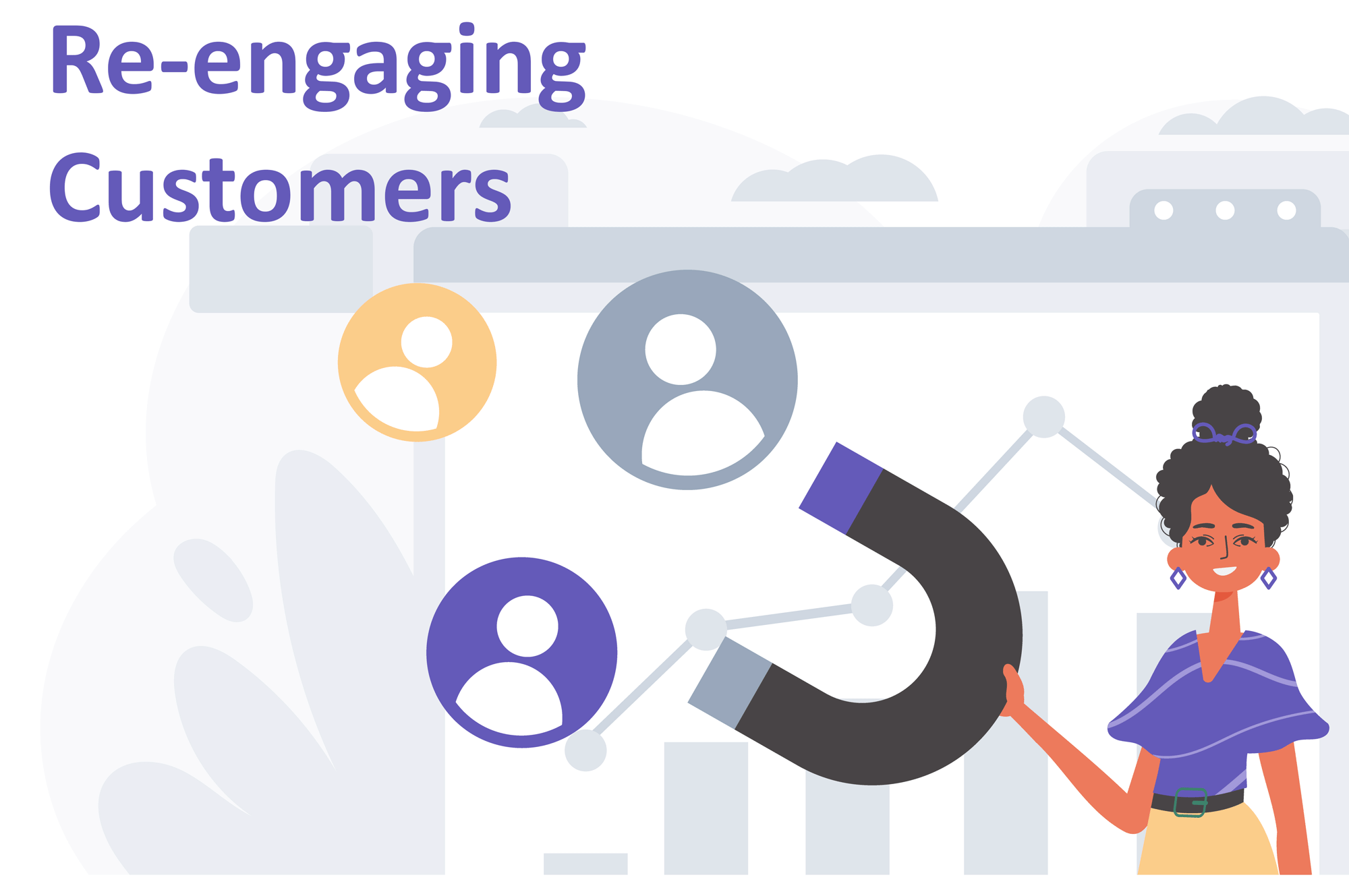
Timely Re-engaging Customers to Reduce Churn
User churn rarely happens overnight. It’s usually a gradual disengagement – fewer sessions, longer gaps between visits, and eventually, silence. The advantage mobile teams have today is that this decline is measurable and, more importantly, reversible if you intervene at the right time with the right message.
Push notifications remain one of the most direct and cost-effective channels to re-engage users. But timing, segmentation, and restraint matter far more than volume.
Re-engaging mobile users before they churn isn’t a matter of sending more notifications, it’s about intervening with precision at the exact moment user intent begins to decay. Most teams underestimate how predictable disengagement actually is. If you plot user activity over time, you’ll notice a clear drop-off curve, and within that curve lie multiple “intervention windows.” The mistake is treating all inactive users the same, when in reality, a user who hasn’t opened your website or app in 7 days is fundamentally different from one who’s been gone for 60.
This guide provides a deeply structured, lifecycle-driven approach to re-engagement using push notifications, one that aligns messaging, incentives, and cadence with user psychology at each stage of inactivity.
Understanding Inactivity as a Signal
Before jumping into designing campaigns, it’s important to define what “inactive” means in your product context. When a user stops engaging, it’s rarely due to a single reason. It’s often a combination of reduced perceived value, competing alternatives, and simple forgetfulness.
The first few days of inactivity are usually circumstantial. People get busy. They travel. They shift attention. But as inactivity stretches into weeks, it becomes intentional. The user is no longer just distracted, they’ve deprioritized your website or app. That distinction is critical. Early-stage re-engagement is about reminding. Late-stage re-engagement is about convincing.
For a news app, 3 days of inactivity might be significant; for a fintech app, 30 days might be normal. The thresholds below (7, 15, 30, 60 days) work well for most content, commerce, and utility websites/apps, but should be calibrated using your retention curves.
Each inactivity window reflects a different user mindset:
- 7 days – Mild disengagement, likely distracted or busy
- 15 days – Waning interest, habit weakening
- 30 days – High churn risk, emotional disconnect
- 60 days – Dormant, possibly lost
Your messaging, tone, and incentives should evolve accordingly.
Stage 1: 7-Day Inactivity – Gentle Re-entry
At the 7-day mark, you’re not dealing with churn yet, you’re dealing with a break in habit. The user hasn’t rejected your product; they’ve simply paused their interaction with it. This is your cleanest opportunity to step back in without resistance.
The most effective approach here is to reconnect the user with what originally mattered to them. That requires leveraging behavioral data: what they browsed, what they clicked, what they saved, or how they typically use your product.
Instead of sending generic prompts like “We miss you,” the notification should feel like a continuation of their previous journey. For example, if a user frequently engaged with fitness content, the message should feel like a natural follow-up: something new, timely, and aligned with their interest profile.
Tone matters significantly at this stage. Anything that feels pushy or sales-driven can backfire because the user hasn’t yet developed resistance. Keep the messaging light, informative, and curiosity-driven.
Equally important is pacing. One or two well-timed notifications over a few days is sufficient. Over-communication at this stage can accelerate disengagement rather than reverse it.
Strategy
- Focus on relevance and personalization
- Avoid discounts or heavy incentives
- Reintroduce core value propositions
Tactics
- Behavioral Nudges
Reference what they previously engaged with: “Still interested in fitness tips? Here’s something new for you.”
- Content Highlights
Showcase what they’ve missed: “Top stories this week you shouldn’t miss”
- Light Personalization
Use name, preferences, or past actions: “Your saved items are waiting”
Frequency
- 1–2 notifications across 2–3 days
- Avoid clustering messages too closely
Stage 2: 15-Day Inactivity – Rebuild Interest through Discovery
By the time a user reaches 15 days of inactivity, the situation has shifted. You’re no longer dealing with a temporary lapse, you’re dealing with fading interest. The user has started forming new habits that exclude your website/app.
At this stage, reminding them of past value isn’t enough. You need to give them a reason to believe there’s something new worth returning for.
This is where feature discovery and novelty play a central role. If your product has evolved – even slightly – this is the moment to surface that evolution. New features, improved experiences, or trending content can act as re-entry points.
There’s also room here for introducing light incentives, but they should feel like added value rather than desperation. Think in terms of unlocking something, rather than offering a discount outright. The psychology here is subtle: users respond better to gaining access than being bribed to return.
Another effective lever is social proof. Humans are naturally influenced by what others are doing. If you can highlight activity by including what’s trending, what others are engaging with, you tap into a sense of collective momentum that makes you product feel alive and relevant.
Timing and sequencing become more important here. Instead of isolated notifications, think in terms of a short narrative arc across multiple messages. Each notification should build on the previous one, gradually increasing the perceived value of returning.
Strategy
- Introduce freshness and novelty
- Use soft incentives
- Reinforce emotional or practical value
Tactics
- Feature Discovery
Highlight something they may not know: “Try our new AI recommendations”
- Social Proof
Show activity from others: “1000 users explored this today”
- Soft Incentives
Non-aggressive rewards: “Come back and unlock a bonus”
Frequency
- 2–3 notifications over 5–7 days
- Experiment with timing optimization (based on past open behavior)
Stage 3: 30-Day Inactivity – High-Intent Recovery
At 30 days, you’re dealing with users who are on the edge of permanent churn. They’ve likely replaced your app with alternatives or have mentally categorized it as non-essential. This is where your strategy needs to shift from subtlety to clarity. The user needs a strong, immediate reason to come back and that reason must outweigh the inertia of staying away.
The most effective campaigns at this stage combine three elements: value, urgency, and simplicity.
Value comes in the form of tangible benefits: discounts, credits, exclusive access, or anything that creates a clear upside. But value alone isn’t enough. Without urgency, users tend to defer action indefinitely.
Time-bound messaging including offers that expire, opportunities that close forces a decision.
At the same time, friction must be minimized. If the notification leads to a generic home screen, you’re losing momentum. Deep linking directly into a relevant action like resuming a cart, continuing a workflow, or accessing a personalized offer will dramatically increase conversion rates.
The tone here should be confident and direct. You’re not asking the user to explore, instead, you’re giving them a reason to act now.
However, restraint still matters. Even in high-intent recovery campaigns, spacing your notifications properly is critical. Overloading the user can reinforce their decision to disengage.
Strategy
- Use clear value propositions
- Introduce stronger incentives
- Reduce friction to re-entry
Tactics
- Win-Back Offers
Discounts, credits, or exclusive access: “We saved something special for you, come back today”
- Urgency + Scarcity
Time-bound messaging: “Your offer expires in 24 hours”
- Simplified CTA
Deep links to specific actions: Resume cart, continue activity, etc.
Frequency
- 3–4 notifications over 7–10 days
- Carefully spaced to avoid fatigue
Stage 4: 60-Day Inactivity – Last Attempt
Once a user crosses 60 days of inactivity, you’re operating in a narrow window of possibility. These users are no longer casually disengaged and may become dormant.
At this point, your strategy should be decisive and finite. This is not the time for extended campaigns or gradual persuasion. You have one or two meaningful attempts to either win the user back or accept the loss.
The messaging should acknowledge reality. A simple, honest tone which recognizes that the user hasn’t been active often performs better than overly polished marketing language. It signals authenticity and reduces the cognitive distance between the user and the brand.
This is also where your strongest incentives come into play. If you’re going to offer something significant, this is the moment. But it must be paired with clarity and immediacy highlighting what the user gets, why it matters, and how to access it right now.
An often overlooked tactic at this stage is feedback collection. Even if the user doesn’t return, understanding why they left provides valuable input for improving retention upstream. A short, well-placed feedback prompt can yield insights that no analytics dashboard can.
Strategy
- Make a final compelling offer
- Be transparent
- Prepare for exit
Tactics
- Direct Messaging
Acknowledge inactivity: “We haven’t seen you in a while – Here’s what’s new”
- High-Value Incentives
Your strongest offer: “Flat 50% off – Just for you”
- Feedback Request
Try to learn why they left: “Tell us what went wrong”
Frequency
- 1–2 final attempts
- Avoid prolonged sequences
The Discipline of Knowing When to Stop
One of the most important and often most neglected aspects of re-engagement is deciding when to stop trying.
There’s a natural tendency to keep pushing, especially when the cost of sending notifications is low. But from a systems perspective, over-messaging has compounding negative effects. It increases opt-outs, reduces overall engagement rates, and can even impact deliverability at the platform level.
A well-designed re-engagement system includes explicit exit criteria.
If a user has ignored a sustained sequence of notifications across multiple stages, typically in the range of 8 to 10 messages, it’s a strong indicator of disinterest. Continuing beyond that point shifts from persistence to noise.
Similarly, if a user remains unresponsive after the 60-day intervention, the probability of recovery drops sharply. At that stage, it’s more efficient to reallocate effort toward active or moderately inactive users.
Negative signals should also be treated as hard stops. Increasing opt-out rates, rapid dismissals, or uninstall events are not just passive indicators, they’re active feedback that the current approach is misaligned.
Stopping is not failure. It’s optimization.

Multi-channel Re-engagement
Beyond Push: Extending the Re-engagement Layer
When push notifications reach their limit, other channels can take over. Email, for instance, allows for richer storytelling and more detailed value communication. Paid retargeting can reintroduce the product in different contexts. SMS, where permission exists, can deliver high-visibility messages with strong response rates.
The key is coordination. These channels shouldn’t operate in isolation, they should form a cohesive re-engagement ecosystem, with consistent messaging and shared user state.
Users who have been fully disengaged should be reclassified, not repeatedly targeted. Marking them as dormant and excluding them from active campaigns preserves system efficiency and protects user experience.
Alternative Channels
- Email re-engagement campaigns
- Retargeting ads
- SMS
Data Retention Strategy
- Mark users as “dormant”
- Exclude from active campaigns
- Reintroduce only during major updates or launches
Building a Cohesive Strategy
An effective re-engagement system is not a collection of isolated campaigns, it’s a continuous process. It begins with real-time detection of inactivity and flows into stage-based interventions that evolve in tone, content, and intensity. Each stage is informed by user behavior, continuously optimized through experimentation, and bounded by clear stopping rules.
What separates high-performing teams from average ones is not the number of notifications they send, but the discipline with which they send them. Precision, timing, and relevance consistently outperform volume.
Here’s an overview of building a cohesive push strategy:
- Detect inactivity in real time
- Trigger stage-based campaigns (7, 15, 30, 60 days)
- Adapt messaging tone and incentives per stage
- Continuously optimize via A/B testing
- Monitor fatigue and engagement signals
- Stop at predefined thresholds
- Shift to alternative channels if viable
Closing Perspective
Users don’t disengage because they dislike your product. More often, they disengage because your product fades from their immediate priorities. Re-engagement, when done correctly, is simply the act of re-entering that priority stack at the right moment with the right message.
A disciplined, stage-based push strategy ensures you’re not just chasing users, but systematically guiding them back. Push notifications are uniquely suited for this but only when used with intent.