Google Chrome Android – Lighter Permission Prompt
Google Chrome is rolling out a less intrusive notification permission experience on Android. The change improves browsing for users while helping websites attract more engaged subscribers and reduce unnecessary subscription costs.
Web push notifications have become an important communication channel for websites. Publishers use them to bring readers back for breaking news and new articles, retailers rely on them to announce offers and recover abandoned carts, and service providers use them to deliver timely updates. Unlike email or SMS, web push notifications allow businesses to reach their audiences directly through the browser, even after visitors have left their websites.
However, the way websites ask visitors to subscribe has not always been ideal.
Most internet users have encountered notification permission requests appearing almost immediately after opening a website. Before they have had an opportunity to explore the content, they are asked whether they want notifications. Some accept simply to dismiss the interruption, while others reject the request without considering whether the updates might be useful.
Google is addressing this problem with a change to how notification permissions are presented in Chrome on Android. Announced in July 2026 and introduced starting with Chrome 155 (October 2026), the new experience is designed to be less intrusive while giving visitors greater flexibility in deciding when to subscribe.
For businesses using web push notifications, including PushAlert customers, the change presents an opportunity to build a more interested subscriber audience rather than focusing solely on subscription numbers.
What is changing in Chrome’s notification permission prompt?
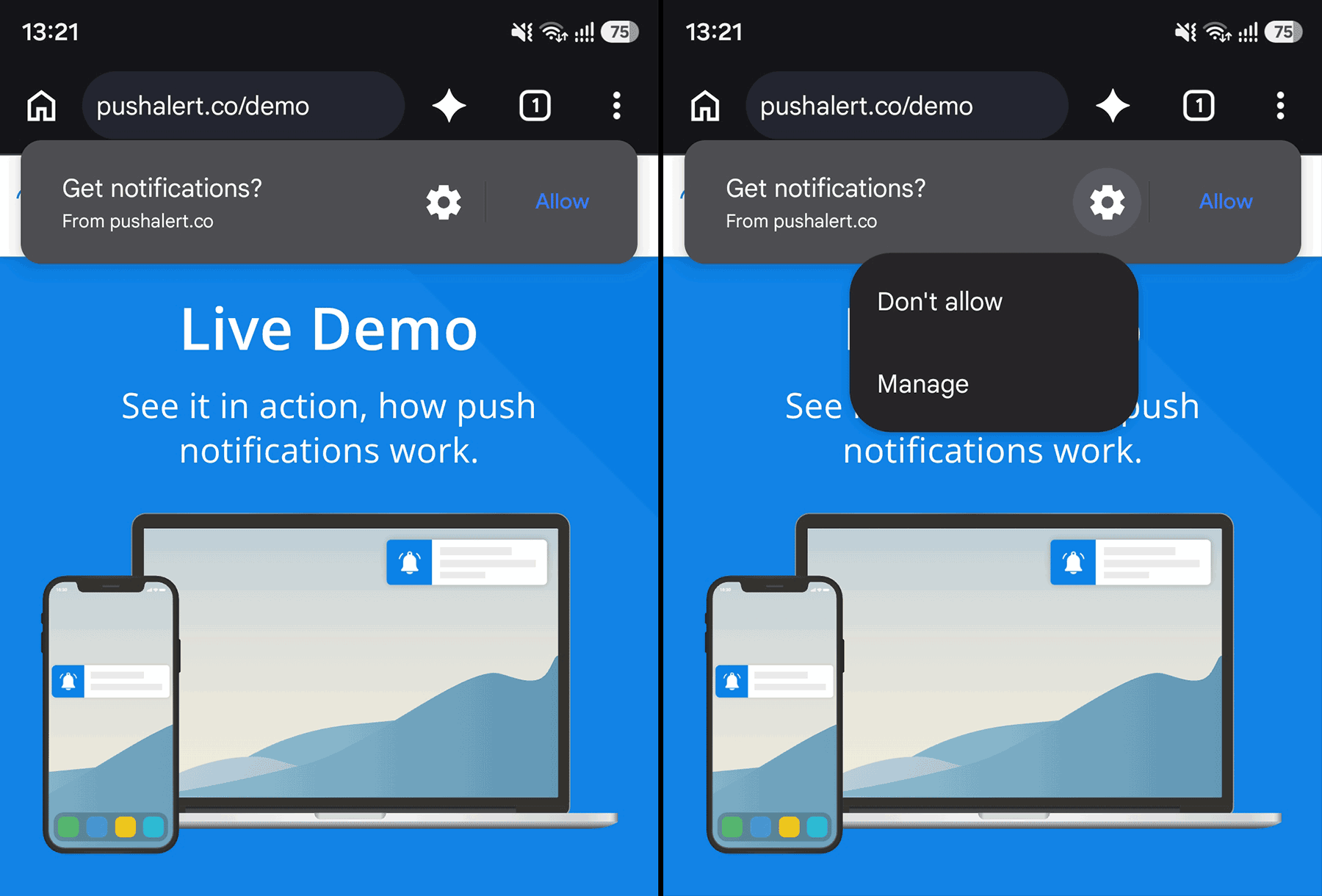
Previously, a website requesting notification permission could trigger a prominent browser dialog that interrupted the visitor’s browsing experience. Chrome’s new approach replaces that interruption with a lighter, non-blocking permission interface on Android. Visitors can continue browsing without having to immediately accept or reject the request.
Google reports the new permission dialog has the same level of user comprehension compared with the previous interface, but with significantly less friction. It also auto-expires if the user does not take any action.
There are three important aspects of this change:
- A less intrusive permission request – Visitors can continue interacting with the website while deciding whether they want notifications, rather than having their browsing interrupted by a prominent dialog.
- An additional subscription option through Site Controls – After a website has initially requested permission, visitors can enable notifications later through Chrome’s Site Controls, even if they ignored the original request.
- Permission requests can expire without a decision – If a visitor does not respond before the prompt expires, the permission request can resolve with the `default` state rather than an explicit acceptance or rejection.
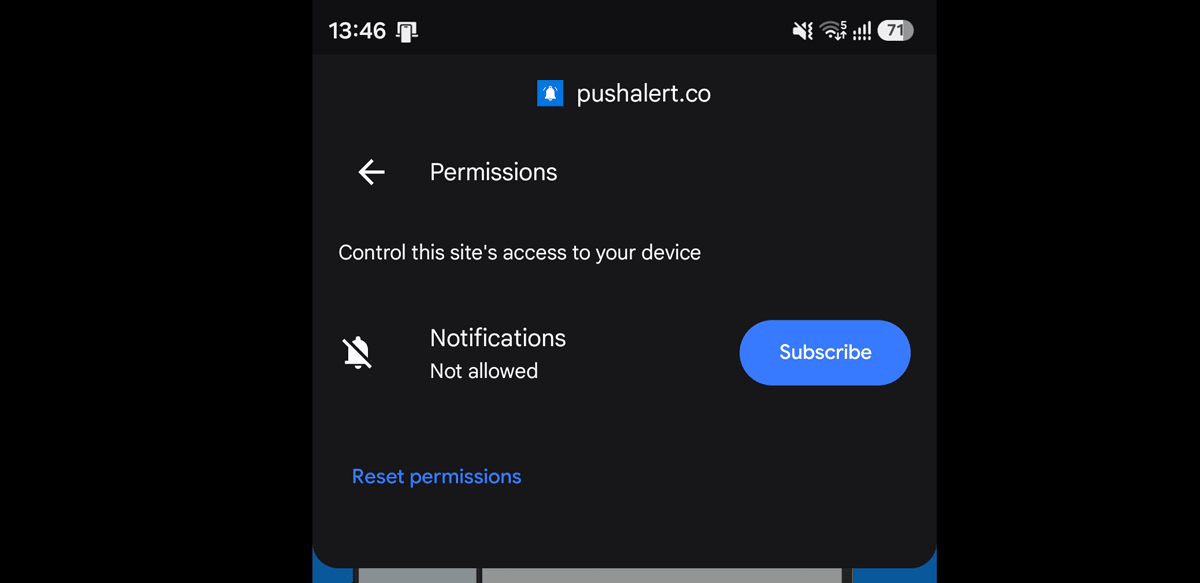
Site Controls Permission – Chrome Lighter Permission Dialog
Why this is good news for website owners
Chrome’s new notification prompt offers websites an opportunity to build a more engaged subscriber base. By making the permission process less intrusive, visitors can make more informed decisions about receiving updates from websites they find valuable. This can help businesses attract subscribers who are genuinely interested in their content, products, or services, leading to stronger engagement and more effective notification campaigns.
Fewer accidental subscriptions means lower costs
A busy online store might get hundreds of thousands of visitors every month. With the older permission prompt, some shoppers would click Allow just to get past it and continue browsing, without really thinking about whether they wanted to receive notifications.
These visitors become part of the subscriber audience even though they may have little interest in receiving future messages. Chrome’s less intrusive approach helps reduce such subscriptions by making permission decisions clearer.
A more interested audience to improve engagement
Accidental subscriptions also affect campaign performance. Visitors who never intended to subscribe are unlikely to click notifications, which can dilute engagement metrics.
Consider a news publisher with 100,000 subscribers and a 2% notification click-through rate. A campaign generates 2,000 clicks. A smaller audience of 70,000 subscribers with a 4% click-through rate would generate 2,800 clicks.
Although these figures are illustrative, they demonstrate why engagement matters more than subscriber count alone. An interested audience can produce stronger results while giving businesses more useful insights into the content and campaigns their subscribers value.
Why publishers stand to benefit
For digital publishers, web push notifications provide a direct way to bring readers back without relying entirely on search engines, social media platforms, or paid advertising.
Publishers invest significantly in producing articles and attracting visitors, yet many readers leave after consuming a single story. Notifications provide an opportunity to turn those occasional visits into repeat readership.
The challenge is convincing readers to subscribe at an appropriate moment. Google specifically recommends contextual prompting for publishers, including suggesting topic alerts after visitors have read several related articles. A two-step opt-in process can really help in this content, detailed later in this article as well.
For publishers using PushAlert, the opportunity extends beyond acquiring subscribers. Features such as RSS to Push, dynamic segmentation, scheduled notifications, and automated campaigns allow them to deliver updates based on reader interests. This helps publishers encourage repeat visits without overwhelming readers with unrelated notifications.
For subscription-based publications, those visits can also create additional opportunities to introduce premium content and convert engaged readers into paying subscribers.
Why retailers and e-commerce websites benefit
Retailers face a different challenge. Visitors often arrive with a specific purchase in mind, and an unexpected notification request can distract them from browsing products or completing an order.
A customer comparing smartphones may have little reason to subscribe immediately after opening an online store. However, if a product is unavailable, an invitation to receive restock alerts provides a clear benefit.
Similarly, shoppers may appreciate price-drop notifications, promotional offers, or updates about products they have shown interest in. Retailers using PushAlert can build on these subscriptions through targeted campaigns, abandoned-cart reminders, and personalized promotional notifications.
By reaching shoppers who have demonstrated interest, ecommerce retailers can focus their campaigns on a more receptive audience and improve conversions without unnecessarily expanding their paid subscriber base.
Benefits for travel, education, SaaS, and other websites
The advantages extend beyond publishers and retailers. Travel websites can offer flight price alerts after visitors search for destinations. Educational platforms can invite enrolled students to receive lesson reminders or important announcements.
Job portals can provide alerts for relevant vacancies, while real estate websites can notify users about new properties matching their searches. SaaS platforms can use notifications for product updates, relevant account activity, or workflow events where browser notifications are appropriate. In each case, the subscription invitation becomes more useful when it relates to something the visitor is already doing.
A better browsing experience for end users
The benefits of Chrome’s update are perhaps most immediate for people browsing the web. Repeated permission requests can become frustrating, especially when they appear before someone has started reading an article or exploring a website. Over time, these interruptions can create notification fatigue, causing users to reject requests automatically.
Chrome’s new interface allows visitors to continue browsing without being forced into an immediate decision. The additional subscription option through Site Controls also gives users flexibility. Someone who initially ignores a request can enable notifications later after discovering that they enjoy the website.
This is particularly useful on mobile devices, where limited screen space makes interruptions more disruptive. The change will also reduce unwanted notifications over time by discouraging accidental subscriptions.
What does this mean for websites using PushAlert?
For PushAlert customers, it’s a good opportunity to make subscription invitations more relevant by highlighting the benefits of receiving notifications and showing them when visitors are most likely to be interested. Once visitors subscribe, features such as dynamic segmentation, RSS to Push, scheduling, automated drip campaigns, abandoned cart notifications, stock notifications and A/B testing can help maintain engagement through relevant messages.
We are already handling the new changes at our end for all customers on PushAlert, websites with custom integrations should account for this behavior.
Will the new prompt reduce subscription rates?
Some websites may initially see a slight dip in subscription opt-in rates as visitors get used to the new, less intrusive permission interface. However, these rates will improve over time as users become more familiar with the new prompt. Others may see little change, particularly if their subscription invitations are already well-timed and clearly explained.
Businesses should therefore evaluate performance over time as people get used to the new layout.
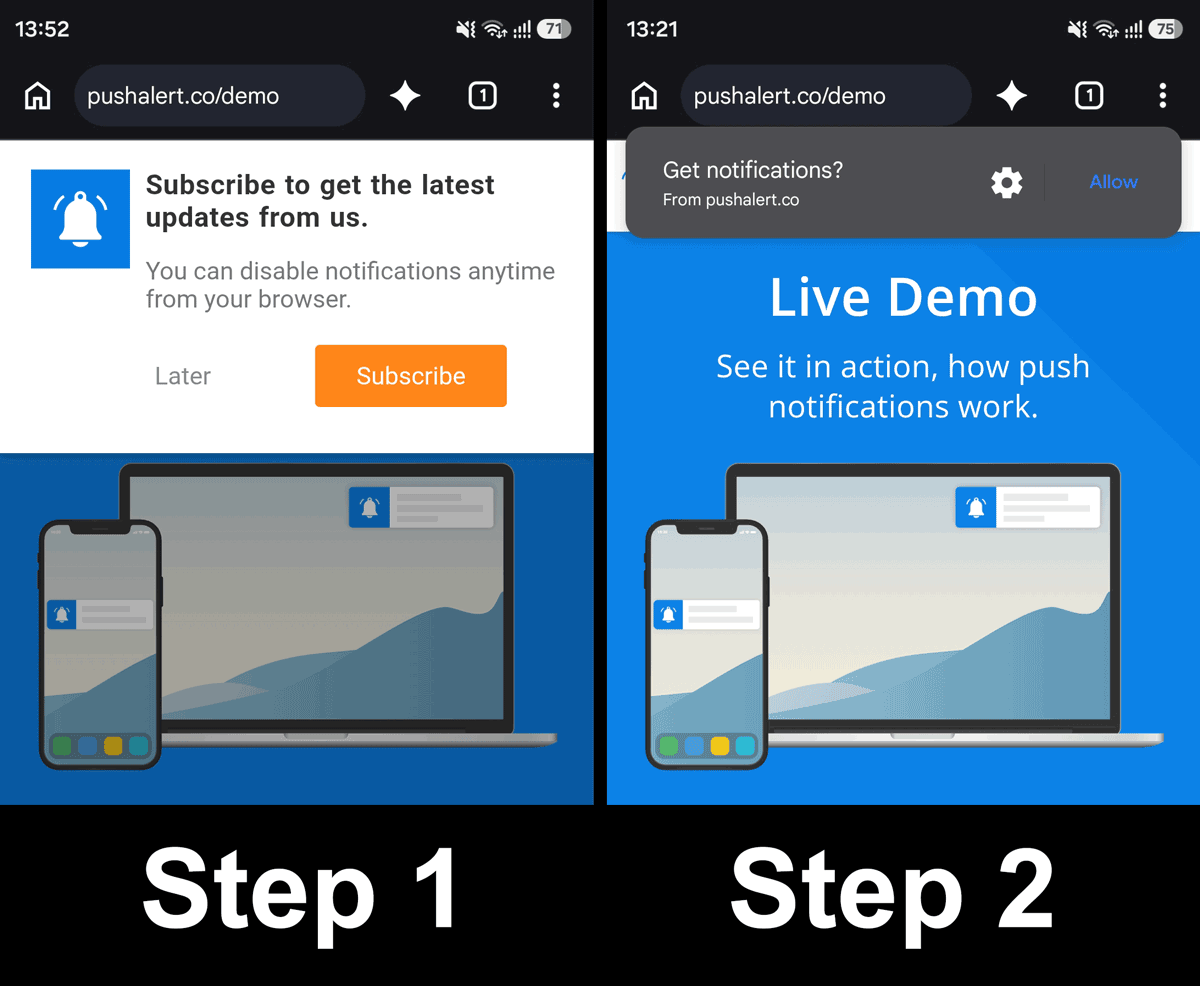
Two-step Web Push Permission Opt-in
Why two-step opt-ins can further improve subscriptions and engagement
Chrome’s new permission experience creates an excellent opportunity for websites to further improve subscription rates and engagement through two-step opt-in.
A two-step opt-in displays a custom invitation explaining the benefits of notifications before requesting browser permission. Visitors first indicate their interest, after which Chrome presents its native permission interface.
This approach prepares visitors for the browser request instead of presenting it without context. With Chrome’s improved notification prompt, this initial explanation may also help users recognize and respond to the subsequent browser prompt.
Two-step opt-ins make the process more intentional and help with improving engagement of newly acquired subscribers.
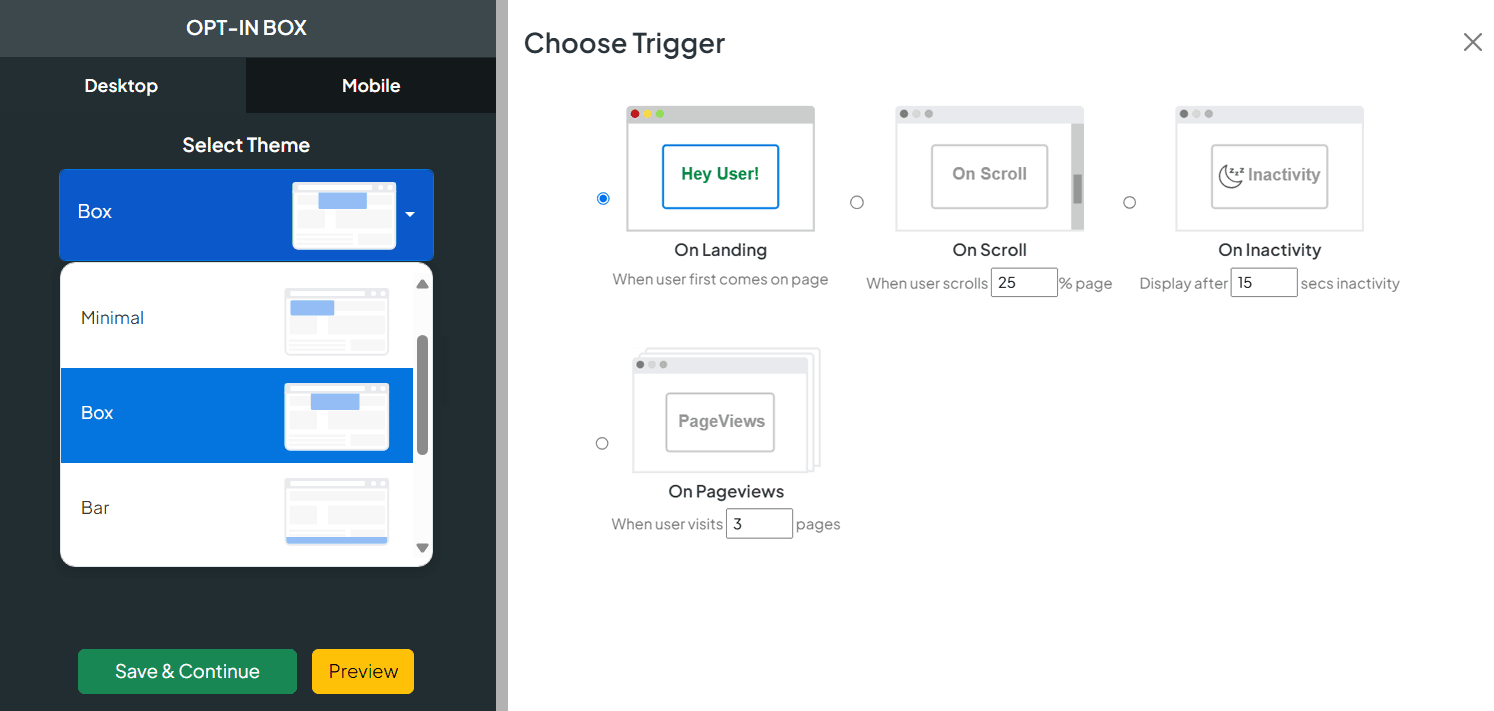
Customizable Two-step Opt-in Themes
Multiple two-step opt-in themes and customizable triggers with PushAlert
PushAlert provides multiple two-step opt-in themes that website owners can customize to match their design and audience. There are also customizable triggers, allowing website owners to control when these invitations appear.
Instead of showing a subscription request immediately to every visitor, businesses can introduce it after visitors have had an opportunity to explore the website, using the available trigger options. This flexibility allows website owners to experiment with different designs, messages, and timing to find combinations that work best for their audiences.
Users will need time to adjust to the new notification prompt
The previous notification permission dialog had been familiar to Chrome users for years. Visitors gradually learned to recognize it and understood how to respond. Chrome’s new interface changes that interaction, so some users may initially be uncertain about the subscription process.
As people encounter the updated interface across different websites, they are likely to become more familiar with it, just as they did with the previous permission dialog. Two-step opt-ins can help during this transition by preparing visitors for the browser permission request.
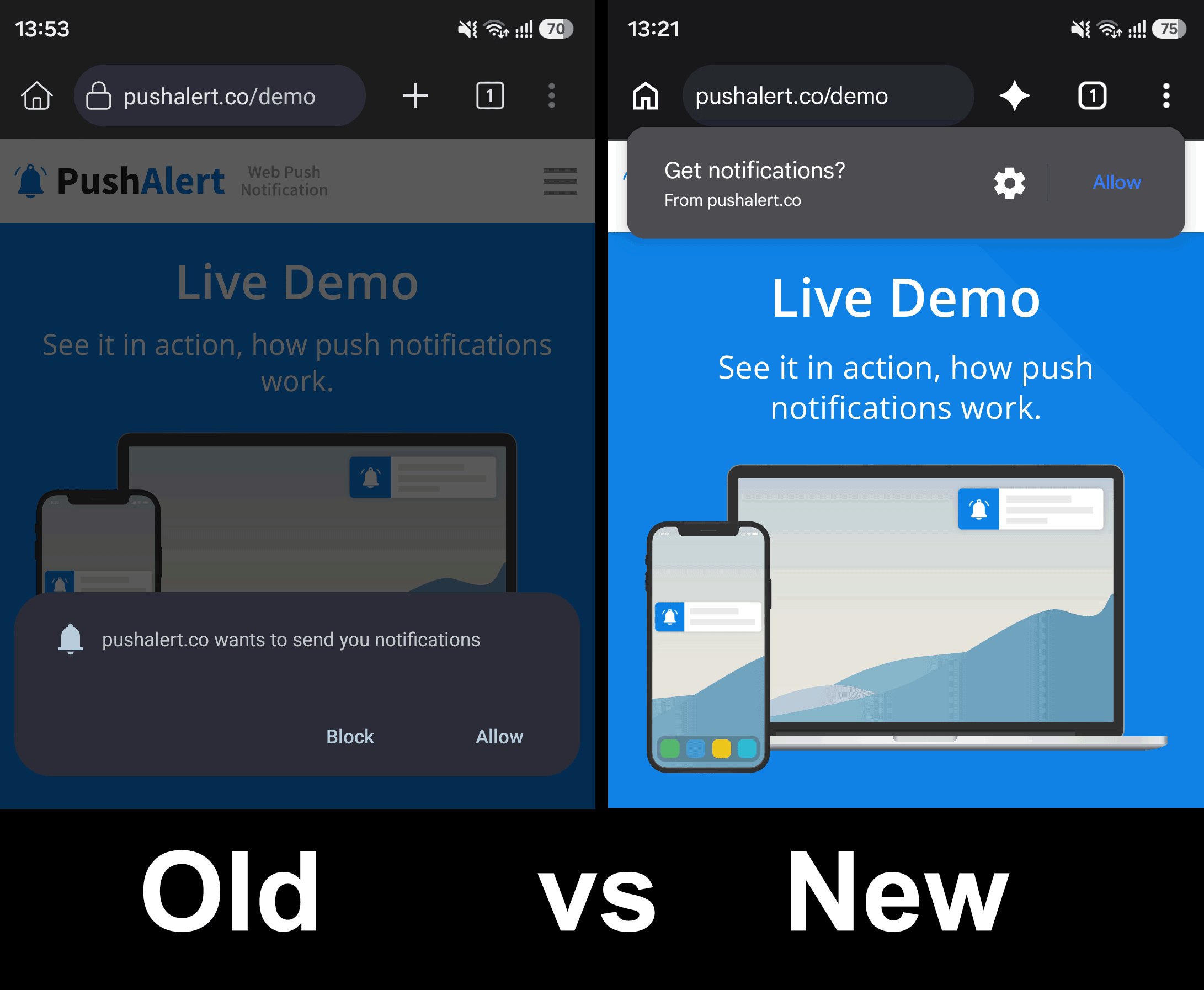
Comparing Old vs New – Chrome Web Push Permission Prompts
Website owners should also avoid drawing conclusions from short-term changes in subscription rates. Monitoring performance over several weeks to months will provide a clearer picture of how visitors respond as the new experience becomes more familiar.
Conclusion
Chrome’s new, less intrusive notification prompt on Android is a positive development for both websites and users.
Visitors gain a more comfortable browsing experience and greater control over notification permissions. Businesses have an opportunity to attract more interested subscribers, reduce unnecessary subscription costs, and improve the effectiveness of their campaigns.
Two-step opt-ins can help websites adapt to the change, particularly while users become familiar with the new permission interface. PushAlert’s customizable opt-in themes and triggers allow businesses to tailor subscription invitations to their audiences.
At PushAlert, we believe the long-term value of web push notifications comes from helping businesses maintain meaningful relationships with their audiences. Growing an owned subscriber list matters, and delivering useful notifications to people who want them matters more.